Genuine Apple Battery vs. Fake Battery: Why a Cheap MacBook Battery Can Kill Your Logic Board
The Short Answer
A genuine Apple MacBook battery is not just cells. It carries a factory battery-management controller that safely regulates charging voltage and current. A cheap fake or non-OEM battery often uses a lower-grade controller and fuse, so it can overcharge, overheat, swell, or send bad voltage into the logic board. Saving a few dollars on a fake battery can cost you a whole logic board. WarriorMac installs only genuine Apple parts, and every battery replacement carries a one-year warranty.
If your MacBook battery is fading, the cheapest option online always looks tempting. The photos look identical to a real Apple battery, the price is a fraction of a proper repair, and the listing swears it is high quality. We understand the appeal. Nobody wants to spend more than they have to. But after years on the bench here in Tampa, we can tell you plainly that the battery is the one part of your Mac where a cheap shortcut can quietly cost you the whole machine.
This is not a scare tactic and it is not a sales pitch. It is a pattern we see over and over. A customer saves money on a fake battery today, and months later the same Mac comes back to us with a dead logic board that costs far more to fix than a proper battery replacement would have in the first place. In this article we are going to open both kinds of battery up, show you the real difference with photos from our own workbench, and walk you through a repair where a counterfeit battery did exactly this to a MacBook Air.
The battery is the one part people try to save money on
Almost everybody knows a battery wears out. It is the part of a Mac people expect to replace, the same way you expect to replace tires on a car. Because it is expected, it is also the part people shop hardest for, and the internet is full of listings promising a MacBook battery for a tiny price. On the surface they look like the real thing. Same shape, same connector, same printed numbers, sometimes even a warning label that looks official.
Here is the problem. A MacBook battery is not just a pouch of stored energy. It is a smart component with its own small computer inside it. That little computer, called a controller board, is what makes the battery safe to live inside a sealed aluminum laptop pressed against your legs. When someone sells a battery for a suspiciously low price, that controller is the corner they cut, and it is the one corner you can never see from the outside.
So the honest question is not really genuine versus fake in terms of the cells. It is genuine versus fake in terms of the brain that controls those cells. That is where the real story lives, and that is what we want to show you.
What actually lives inside a genuine Apple battery
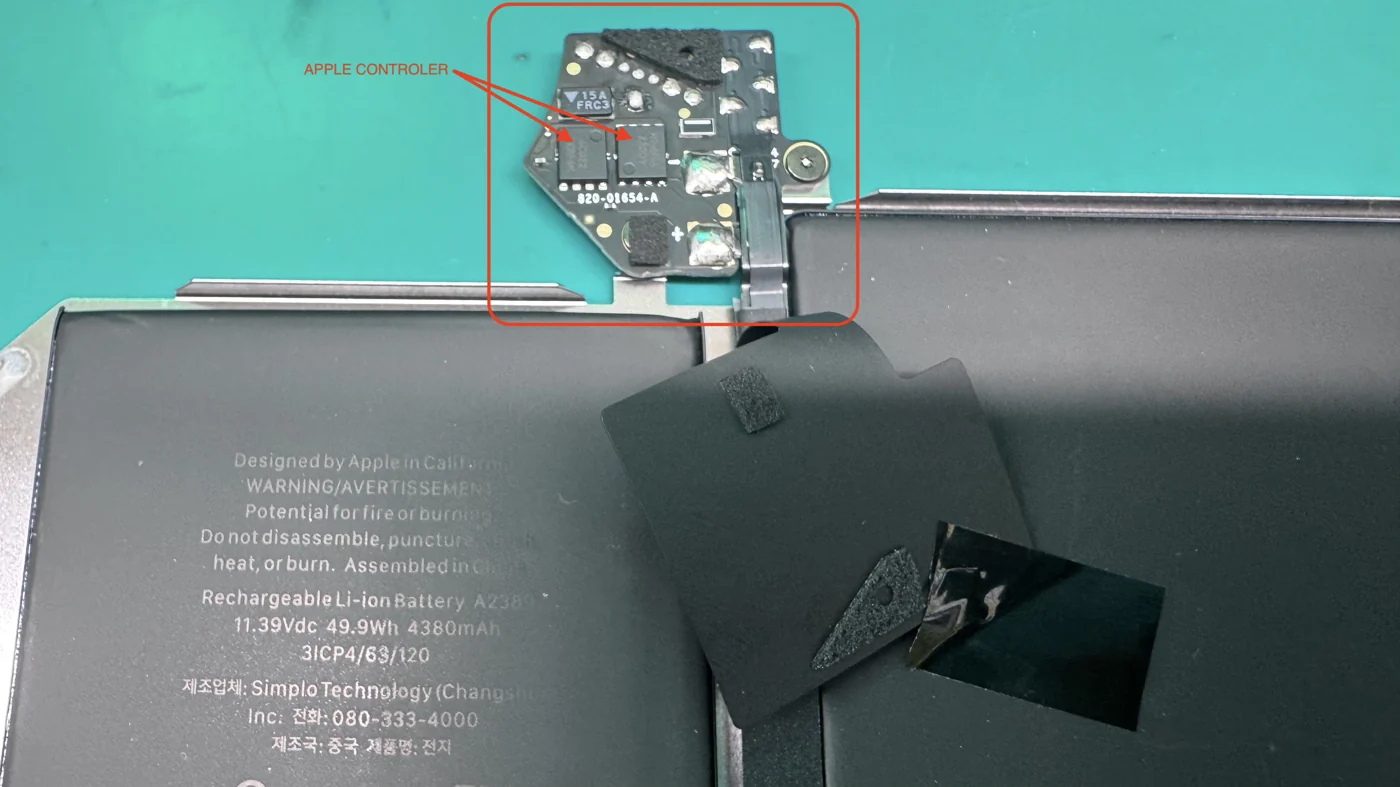
A genuine Apple battery carries a controller board that Apple engineered specifically for your model of Mac. In the photo above, that is the small circuit board circled on the battery. On this one it is clearly stamped 820-01654-A, and it includes a proper 15A FRC3 safety fuse. Those numbers are not decoration. They tell the Mac exactly what it is talking to.
This controller does a lot of quiet work every second the battery is connected. It reports the true charge level to macOS, it balances the individual cells so none of them are overworked, it watches the temperature, and it holds the voltage in the exact window your logic board expects. If anything drifts out of a safe range, the controller and its fuse are designed to cut the power before damage happens. This is the invisible safety system that lets you charge overnight, run the machine on your lap, and trust the battery percentage on your screen.
When we install a genuine Apple battery during a battery replacement, we are not just swapping a power source. We are restoring that whole safety conversation between the battery and the Mac. The machine recognizes the part, reports accurate health, and charges the way Apple intended. That is the entire point of using genuine Apple parts instead of a gamble.
What a fake battery is really hiding
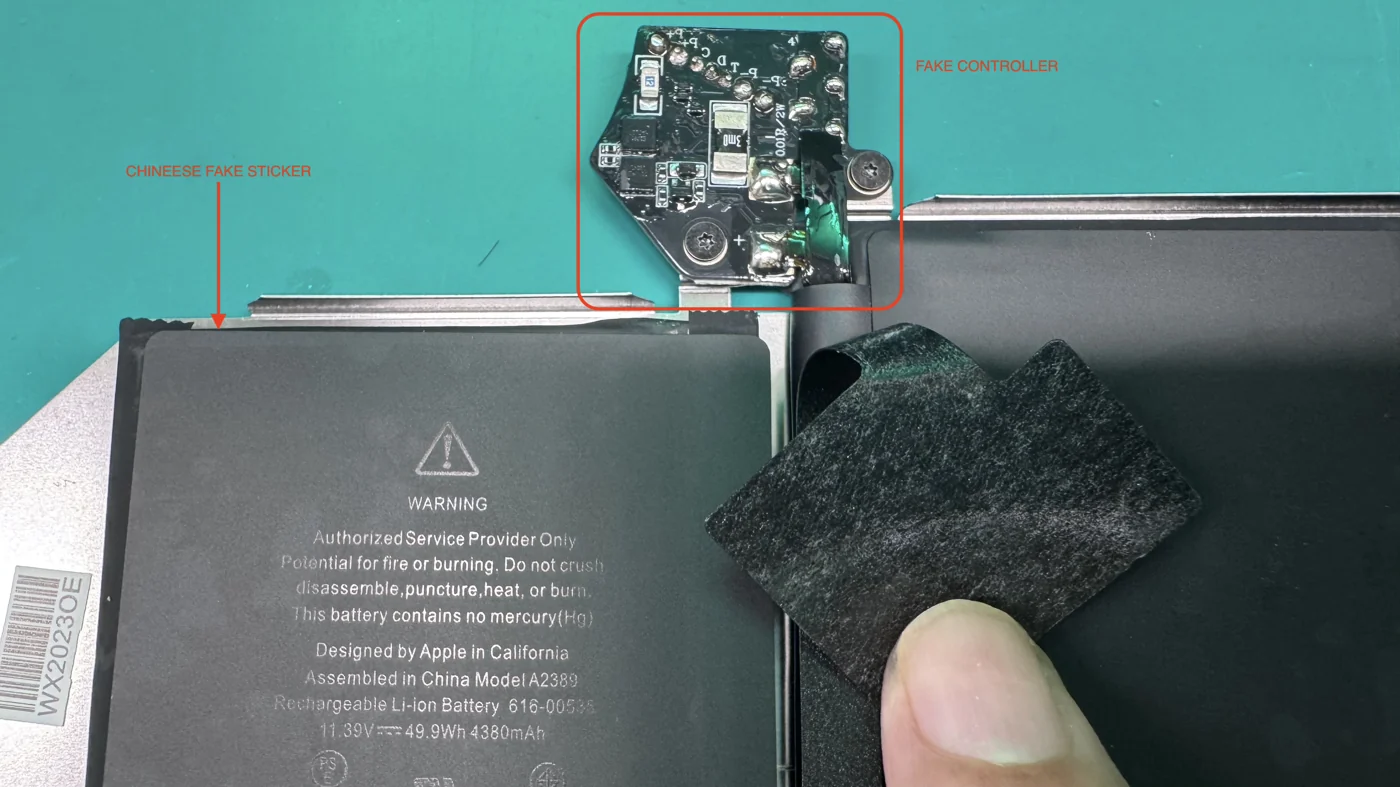
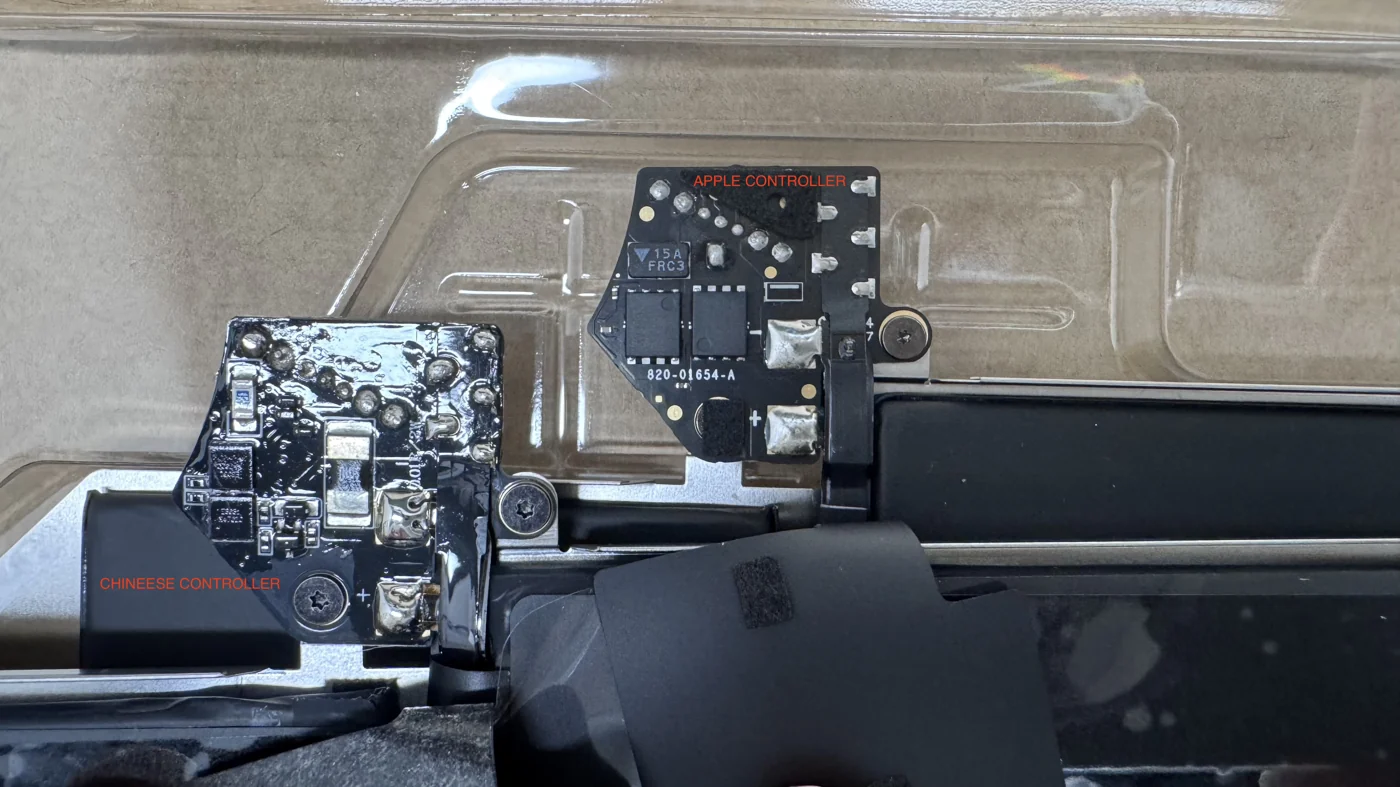
Now look at the counterfeit version. From a normal distance it could pass for the real thing, which is exactly why these fool so many people. But look closer at the controller. There is no Apple part number. The soldering is crude and done by hand. The protection circuitry that should match the real 820-01654-A board simply is not there in any proper form. In its place is a cheap clone that does the bare minimum to make the laptop switch on in the store or on the first day.
The most telling detail is the sticker. Counterfeit packs almost always wear a fake warning label printed to imitate the genuine one, right down to the small text and symbols. It is there to make a buyer feel safe. It is marketing on a part that has none of the real safety engineering behind it. A sticker cannot regulate voltage, and it cannot cut the power when something goes wrong.
This is what makes a counterfeit battery so dangerous. It is not that it fails on day one. It usually works at first, which is what convinces people they got a great deal. The harm builds slowly and silently, and by the time you notice a problem, the damage has often already reached parts far more expensive than the battery.
How to tell the difference on the bench
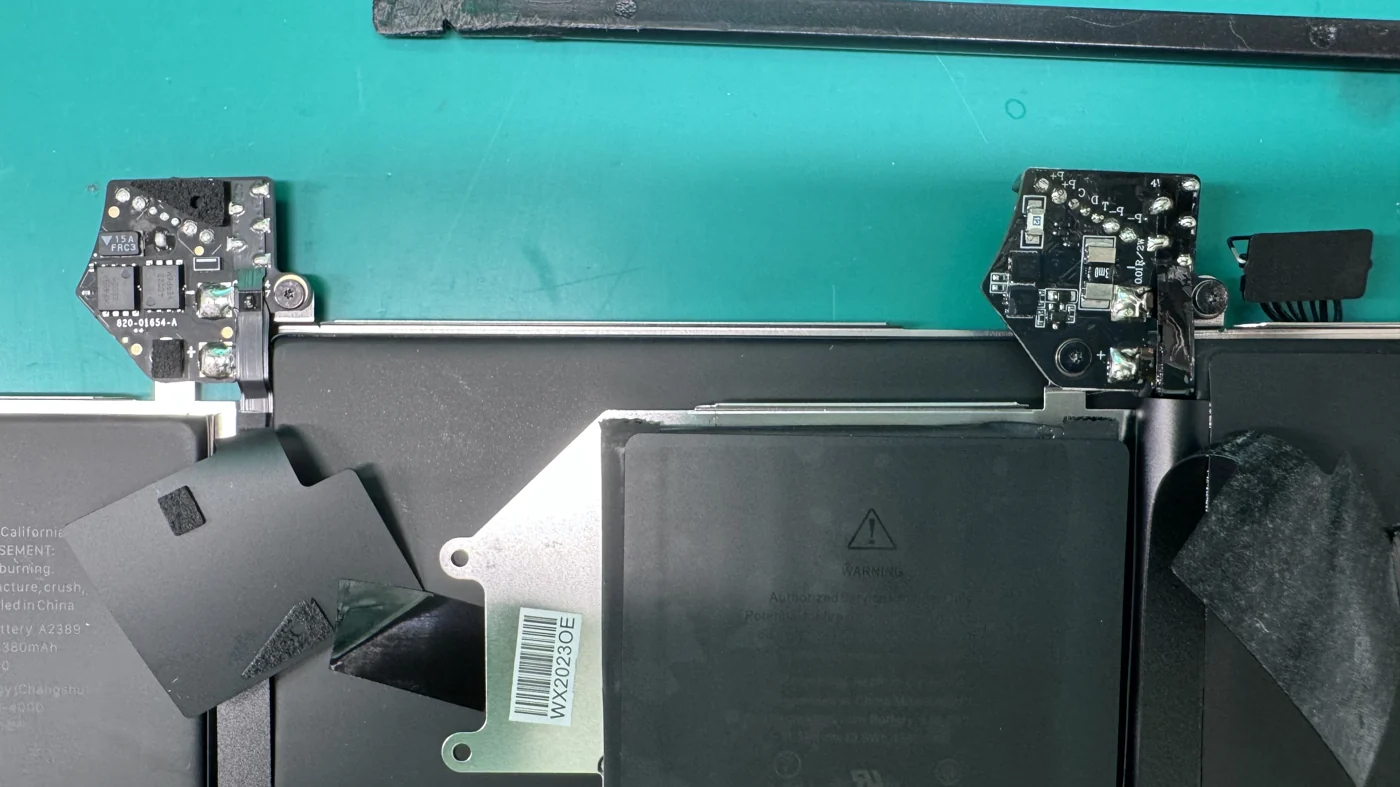
Placed side by side, the difference is obvious to a trained eye. The genuine Apple controller on the left is a clean, machine-made board with the correct part markings and the proper safety fuse. The counterfeit controller on the right is thinner, missing the Apple markings, and built to a price rather than a standard. Same job on paper, two completely different levels of engineering.
You will not usually get to see this comparison as a customer, because the controller lives under the battery and is hidden the moment the pack is installed. That is the honest reason a fake is so easy to sell. The part you are trusting with the safety of your whole Mac is the one part you can never inspect after it is fitted. This is exactly why who installs your battery, and what they install, matters so much.
When a Mac comes to us with unusual battery behavior, swelling, wrong percentages, or a machine that suddenly will not turn on, one of the first things we check is whether a previous battery was genuine. More often than we would like, we find a clone controller like the one on the right, quietly stressing a machine it was never engineered to protect.
Why a fake battery ruins your Mac in the long run
A counterfeit battery does its damage in slow motion, and that is precisely what makes it worse than an obvious failure. Because the fake controller cannot regulate voltage and current the way the real one does, it feeds your logic board power that is slightly wrong, again and again, every time you charge. Your Mac has no idea it is being lied to, so it keeps accepting that power.
Without proper safety cutoffs, a fake pack has nothing reliable standing between a small fault and your most expensive components. The lithium cells in a low-quality battery are also more likely to swell over time. A swelling battery pushes up on the trackpad and the case from the inside, which can crack the trackpad, warp the chassis, and in the worst cases create a genuine fire risk inside a sealed laptop.
The single most costly outcome is the one people never see coming. Months of slightly wrong voltage can stress the power management circuitry until the logic board fails for good. At that point what started as a bargain battery has turned into the death of the brain of the computer. A repair that could have been a straightforward battery replacement becomes a logic board job, and sometimes the machine is simply not worth saving anymore. That is the real price of a cheap battery, and it is almost always higher than doing it right the first time.
A real repair: the MacBook Air M1 that came in dead
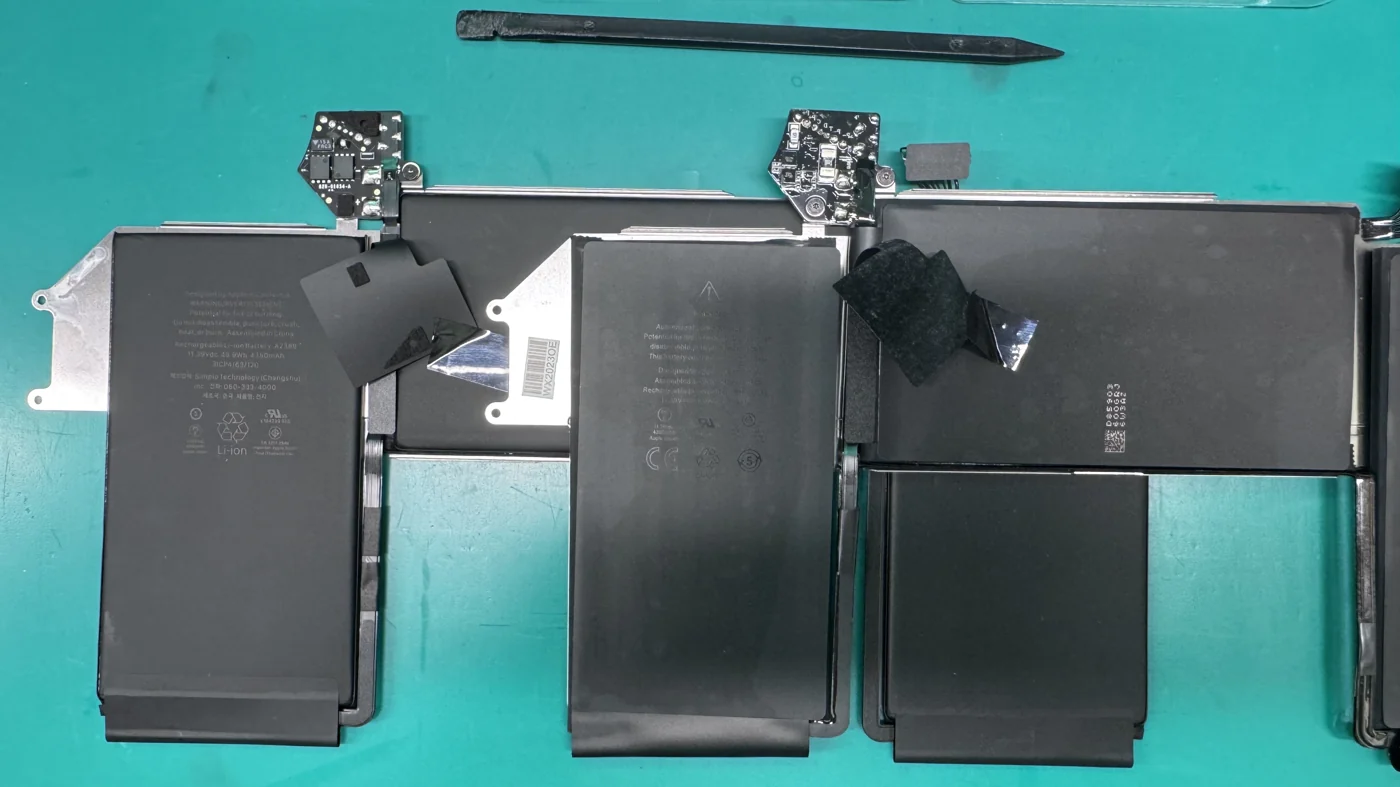
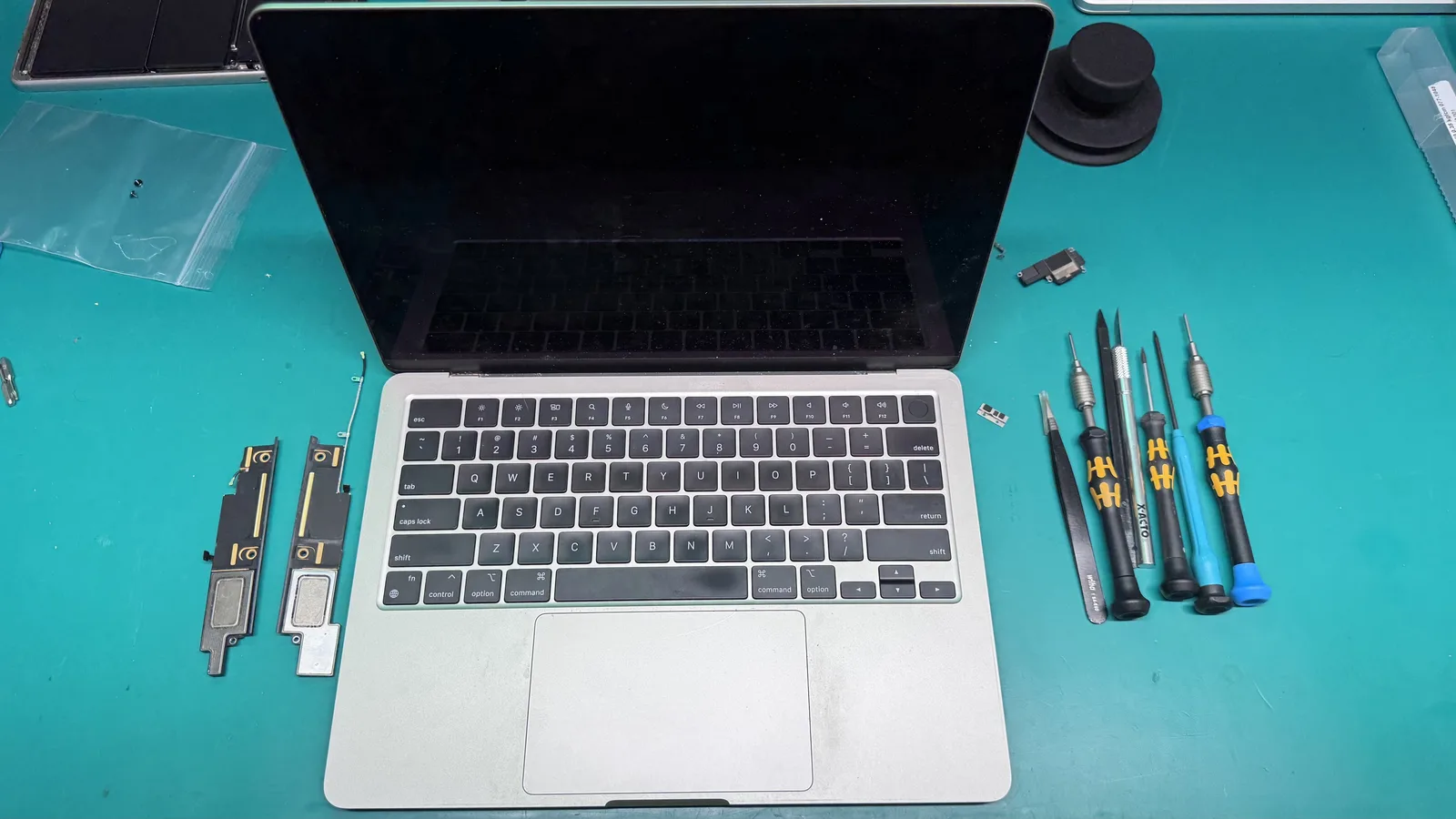
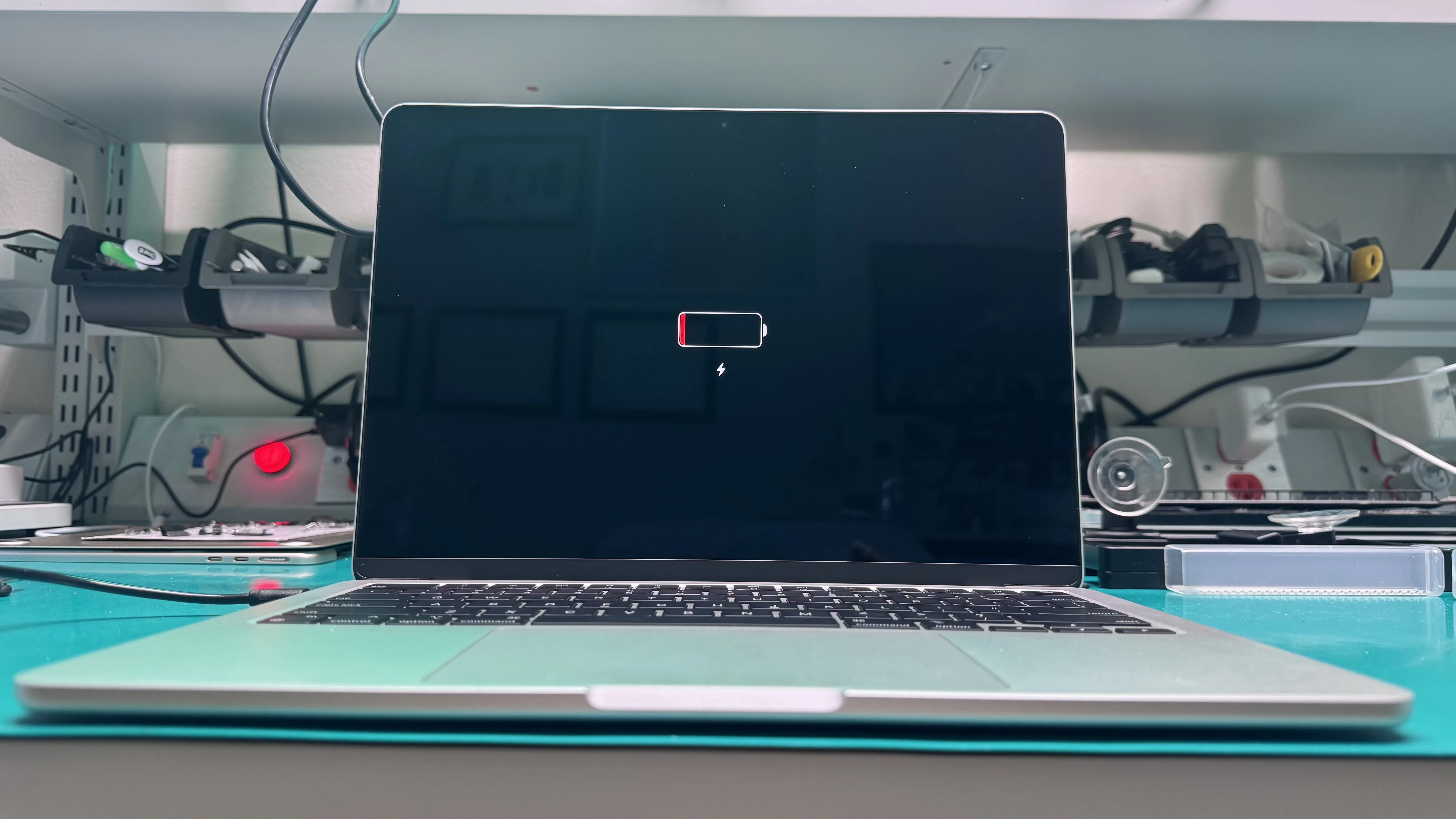
Let us make this real with a machine that actually came across our bench. A customer brought in an Apple MacBook Air 13-inch, the M1 model from 2020, that was completely dead. No power, no startup chime, no display, and nothing at all when it was plugged into the charger. When a Mac shows no signs of life like that, the most expensive possibility is always on the table, and in this case the diagnosis confirmed it. The logic board was dead.
The interesting part came during teardown. This battery had already been replaced at some point before it reached us, and it was not genuine. It was a counterfeit pack, model A2389 with 616-00536 printed on it, rated 11.39V and 49.9Wh. Instead of the real Apple controller board with its 15A FRC3 fuse, it carried a crude clone controller with no Apple markings, hand-soldered joints, and one of those fake warning stickers. In other words, it was the exact fake we have been describing, sitting inside a real customer's Mac.
With no genuine protection circuit in the loop, that fake pack had been feeding unregulated voltage into the board for months. Over time it stressed the power management circuitry until the board finally gave out. A machine that should have needed nothing more than an honest battery service instead arrived with its most costly component destroyed, all to save a little money on a battery earlier in its life. We documented the whole thing, including close-up photos of the real and fake controllers, in a detailed battery case study on our battery repair page so you can see the evidence for yourself.
This is not a rare horror story we keep for effect. It is the natural end of the counterfeit battery pattern, and the MacBook Air that will not turn on is simply the version that finally reached the emergency room.
What this means for you
If your MacBook battery is getting weak, the smart move is not the cheapest listing you can find. It is a proper battery replacement using a genuine Apple battery, installed by someone who knows what a real controller board should look like. That protects the far more expensive parts of your Mac and keeps the safety system your laptop was designed around fully intact.
If you have already had a battery replaced elsewhere and you are seeing warning signs, do not wait. A battery that swells, reports strange percentages, drains oddly, or a Mac that has started acting unstable on the charger, all deserve a look before the trouble spreads to the board. The same goes for any Mac that has taken liquid damage, since moisture and battery faults can hide together. Catching a bad battery early is the difference between a simple fix and a logic board repair.
The honest bottom line is the one we give every customer who asks us about a bargain battery. The cells are only half the story. The controller board is the half that keeps your Mac alive, and it is the exact half a counterfeit leaves out. If you are unsure what is inside your MacBook right now, bring it to us for a free diagnostic and we will tell you the truth, the same way we would want someone to tell our own family.
Frequently Asked Questions
Can a fake MacBook battery damage the logic board?
Yes. A genuine Apple battery includes a factory battery-management controller that safely regulates charging. Many cheap non-OEM batteries use a lower-grade controller and fuse, which can send incorrect voltage or current into the board and cause logic-board damage, not just poor battery life.
How can I tell if a MacBook battery is genuine?
A genuine Apple battery has an Apple controller board with matching Apple part numbers printed on the cell and controller. Fake batteries often have a generic or re-stickered controller. Under the hood the difference is clear when you compare the two side by side, which is exactly what our case study shows.
Why is a genuine Apple battery more expensive?
You are paying for the safety electronics, correct chemistry, and quality control that protect your Mac. A fake battery may look identical from the outside but skips the safety features that keep charging voltage and heat under control.
Does WarriorMac use genuine Apple batteries?
Yes. WarriorMac installs only genuine Apple parts, and every battery replacement carries a one-year warranty. We do not fit cheap non-OEM batteries that can put your logic board at risk.
Need Mac Repair Help?
Our Apple-certified technicians are ready to help. Free diagnostics, genuine parts, and competitive pricing.