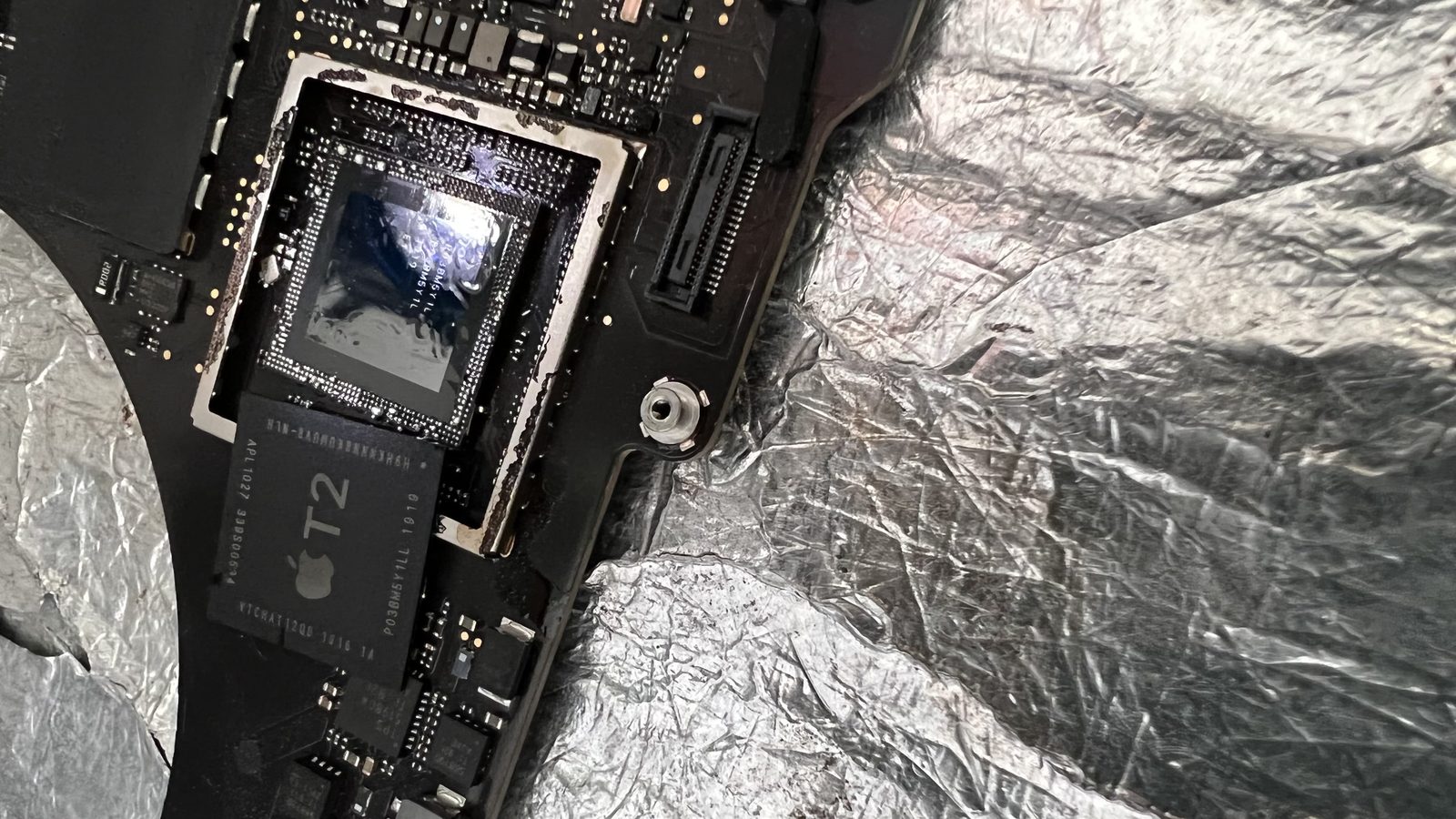
Apple T2 Security Chip
The chip that made Mac repair and data recovery fundamentally harder
Quick Definition
The Apple T2 Security Chip is a custom Apple-designed silicon chip present in certain 2018-2020 Intel Macs. It handles real-time SSD encryption, secure boot, the Touch ID sensor, and system management controller (SMC) functions. The T2 chip made Macs more secure but also created significant repair and data recovery challenges.
What the T2 chip does
The T2 chip is a mini-computer within your Mac. It performs real-time hardware encryption on all data written to the SSD (the drive is encrypted at the hardware level, always), manages the secure boot process to prevent unauthorized software from loading, processes Touch ID fingerprint data in a secure enclave, controls the camera and microphone disconnection for privacy, and handles system management functions like thermal management, battery charging, and sleep/wake.
Which Macs have a T2 chip
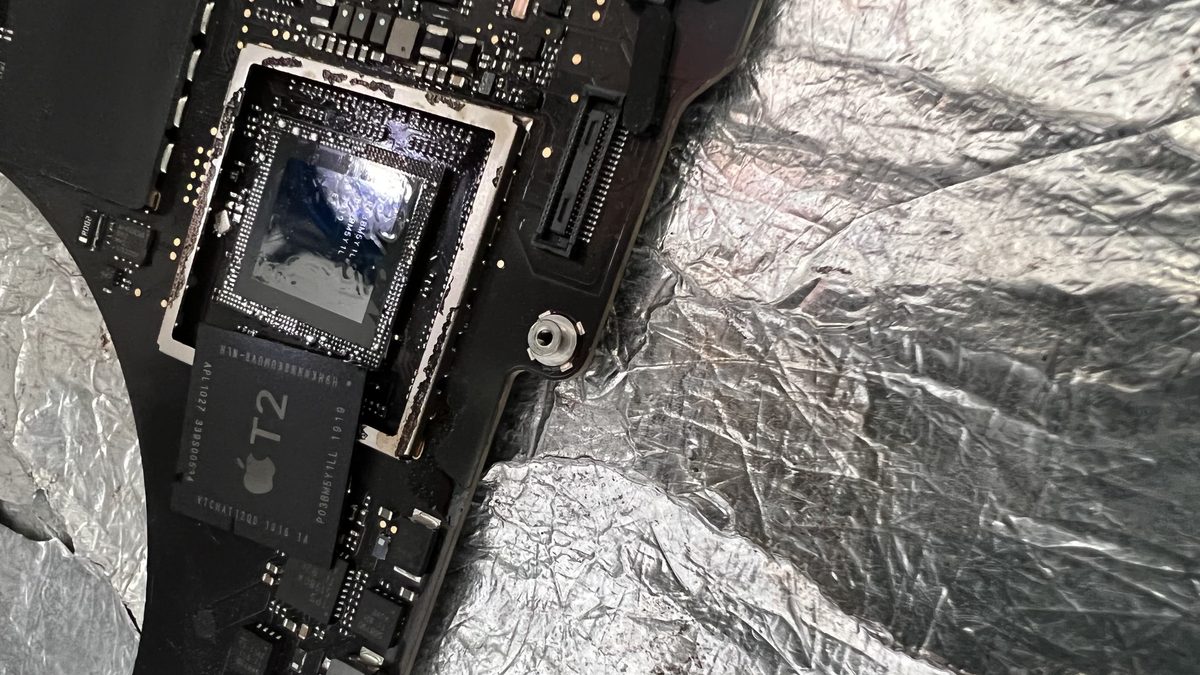
The T2 chip was introduced in the 2017 iMac Pro and appeared in all MacBook Pro models from 2018-2020, MacBook Air 2018-2020, Mac mini 2018, Mac Pro 2019, and iMac 2020. Apple Silicon Macs (M1 and later) do not have a separate T2 chip, the T2's functions are integrated directly into the M-series chip itself.
How the T2 chip affects repairs
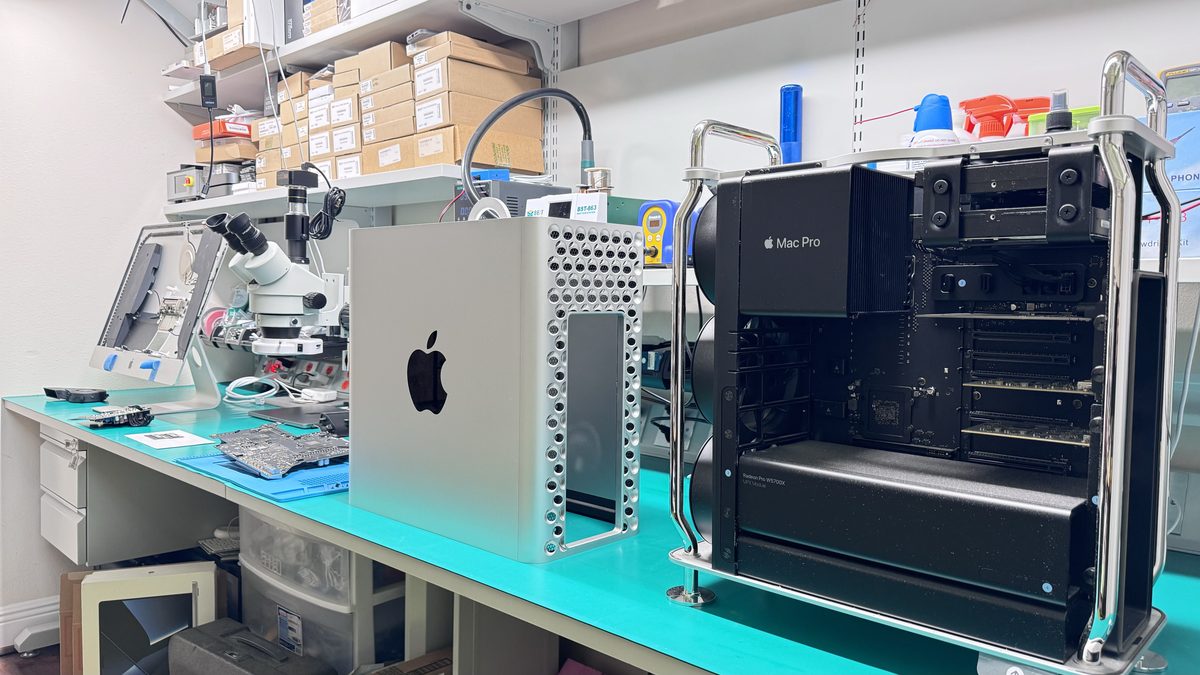
The T2 chip ties certain components together in a pairing relationship. When Apple replaces a logic board, display, Touch ID sensor, or top case on a T2 Mac, they run a proprietary Apple Service Toolkit (AST2) diagnostic that re-pairs the new component with the T2 chip. Without this pairing step, certain features may not work correctly. Independent repair shops cannot run AST2, which creates challenges for some T2-related repairs. However, component-level board repair sidesteps this issue entirely because the original T2 chip stays on the original board.
T2 and data recovery
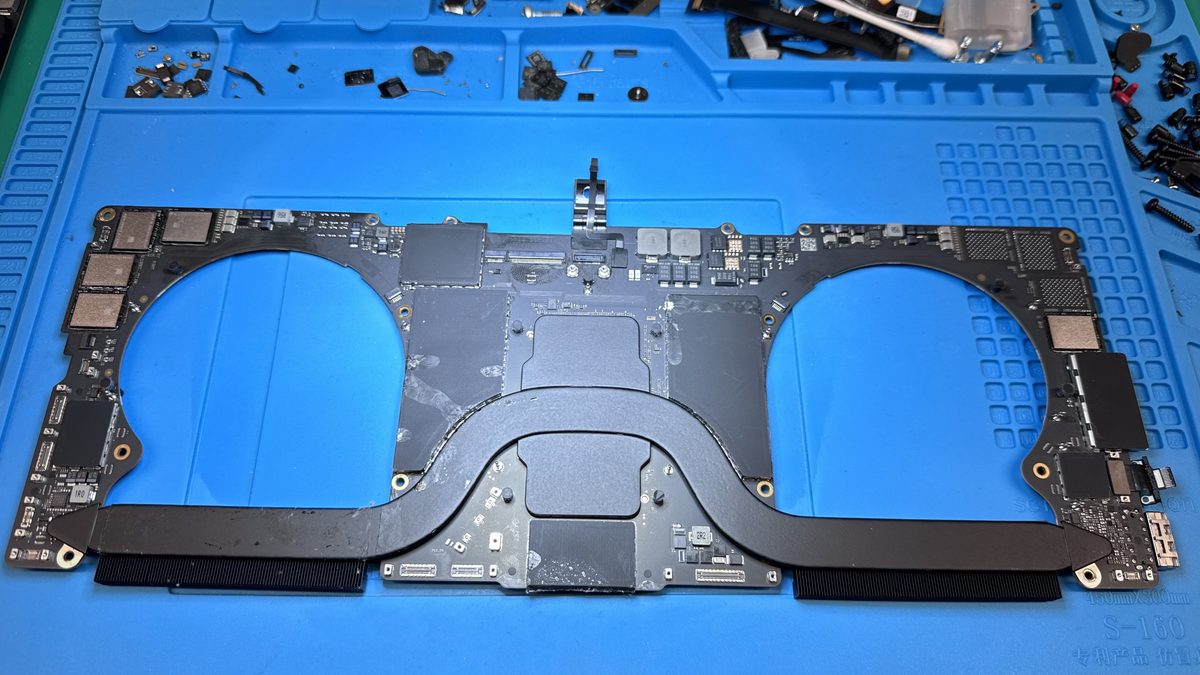
Because the T2 chip encrypts all SSD data at the hardware level, data recovery on T2 Macs is fundamentally different from pre-T2 Macs. The encryption key lives on the T2 chip, not on the SSD. If the T2 chip or the logic board is destroyed, the data cannot be decrypted, period. This is why board-level repair (preserving the original T2 chip) is so important on these Macs: a full board replacement means losing the encryption key and all data.
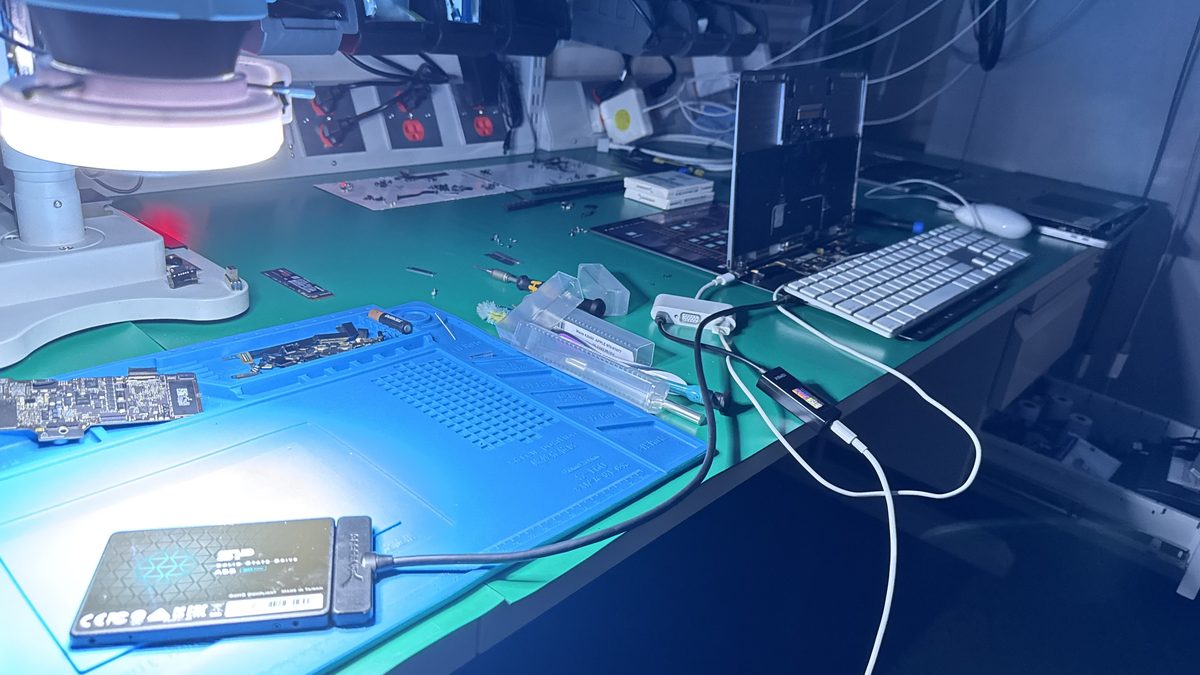
How WarriorMac Handles This
WarriorMac's board-level repair approach is especially valuable on T2 Macs. By repairing the original logic board rather than replacing it, we preserve the T2 chip and its encryption keys, keeping your data intact. For T2 Macs with power or boot failures, component-level repair is often the only way to recover both the machine and the data.
Related WarriorMac services & guides
Frequently Asked Questions
Can data be recovered from a dead T2 Mac?
Only if the T2 chip and the SSD are both intact on the original logic board. We perform board-level repair to restore power to the board, which unlocks the T2 encryption. If the T2 chip itself is destroyed, the data cannot be recovered.
My T2 MacBook will not turn on. Is my data lost?
Not necessarily. Most no-power failures on T2 Macs are caused by components other than the T2 chip (power management ICs, charging circuits). If we can repair the board and restore power, the T2 chip and your data are preserved.
Does the T2 chip affect which repairs are possible?
The T2 chip's component pairing means that some part swaps require Apple's proprietary pairing tool. Component-level repair avoids this issue because the original T2 chip stays in place. This is one of many reasons board-level repair is the preferred approach on T2 Macs.
Is the T2 chip the same as Apple Silicon?
No. The T2 is a separate security chip found in 2018-2020 Intel Macs. Apple Silicon (M1, M2, M3, M4) integrates the T2's functions directly into the main processor. The repair and data implications are similar but the architecture is different.